
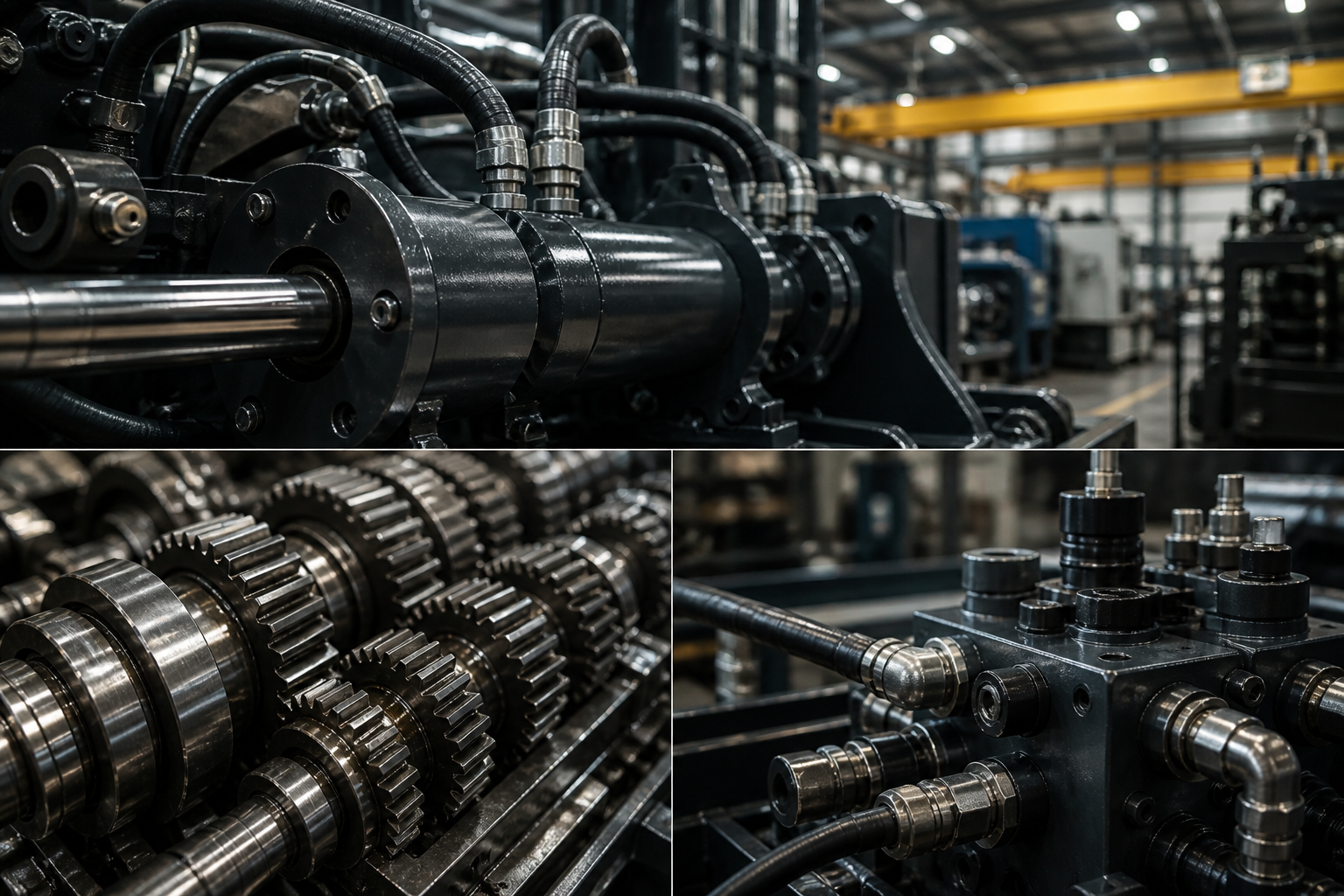
Hydraulic systems are fundamental to industrial operations, where efficiency, reliability, and equipment longevity are critical. The performance of these systems is directly influenced by the quality and suitability of the hydraulic fluid used. Selecting the correct fluid is essential to ensure stable operation and minimize downtime.
The Function of Hydraulic Fluids
Hydraulic fluids serve multiple critical roles within a system:
- Power transmission
- Lubrication of moving components
- Heat dissipation
- Protection against wear and corrosion
Any compromise in fluid quality can directly affect system efficiency and component lifespan.
Key Factors in Fluid Selection
1. Viscosity Stability
Maintaining the correct viscosity ensures consistent system response and protection across operating temperatures.
Typical industrial grades:
- ISO VG 32
- ISO VG 46
- ISO VG 68
2. Anti-Wear Protection
Hydraulic systems operate under continuous pressure. Fluids must provide protection against wear, particularly in pumps and valves.
3. Oxidation Resistance
Extended operation at elevated temperatures can lead to fluid degradation. High-quality fluids resist oxidation, maintaining performance over time.
4. Cleanliness and Filtration Compatibility
Contaminants can reduce system efficiency and cause premature failure. Fluids must support system cleanliness and filtration performance.
Impact of Using Incorrect Fluids
Using unsuitable hydraulic oil may result in:
- Reduced system efficiency
- Increased wear of components
- Overheating and fluid breakdown
- Higher maintenance costs and downtime
Recommended Lubenta Solutions
Lubenta offers the VISCORA industrial lubrication range, engineered to support reliable and efficient system performance:
- VISCORA Hydraulic Oils (ISO VG 32 / 46 / 68) – Designed for anti-wear protection, thermal stability, and operational consistency
- VISCORA EP Gear Oils – Engineered for load-carrying capacity and durability in industrial gear systems
These formulations are developed to deliver stable performance across demanding industrial environments.
Conclusion
Efficient hydraulic system operation depends on selecting the correct fluid with the right balance of viscosity, protection, and stability. A properly engineered lubricant plays a key role in maintaining equipment performance, reducing downtime, and ensuring long-term operational reliability.